

Sound cannons at Leslie Barns

As of mid-May 2026, the sound cannons at Leslie Barns, one of the TTC’s streetcar facilities located at Leslie Street and Lake Shore Boulevard East, have been deactivated for the remainder of the active nesting season. No sound cannons were used for the 2026 period.
Since its opening more than a decade ago, the large green rooftop at Leslie Barns has created an ideal environment for the birds to gather, attracting up to 15,000 seagulls annually.
The large seagull population on the roof poses a notable health and safety concern for both TTC staff as well as the birds. The TTC has worked with experts to try several methods to deter them, and while some of the measures helped to a certain degree, the seagulls return each year.
In previous years, the TTC has used two sound cannons — (also known as “scare cannons”’ or “bird cannons”) to deter the birds from returning to the rooftop, in sync with the arrival of the seagulls and nesting season.
The use of sound cannons has proven to be the most effective solution recommended by experts to address seagull overpopulation. The TTC has also worked with both a biologist and noise consultant to ensure the sound cannons are used safely, effectively and within provincial noise limits. Currently, the TTC has not activated sounds cannons for the 2026 nesting season.
In addition to the potential use of sound cannons, the TTC will once again implement the same system of seagulls deterrents including framed netting, patrolling and egg collection.
What to expect:
Frequency
- If required, two sound cannons will be activated one after the other a maximum of four times per day.
- The cannons will begin no earlier than 9 a.m. until 5 p.m. daily and at random intervals.
- If there are no birds present, the cannons will not be used.
Noise
- If activated, noise will be generated from the rooftop sound cannons.
- The sound cannons may sound similar to fireworks in the distance.
- The cannons will be pointed away from the residential areas to the north to limit the effect of the noise. The sound cannons do not fire ammunition. Instead, they emit a loud sound that scares away the seagulls so they relocate elsewhere.
PLEASE NOTE: No birds are harmed as a result of this process.
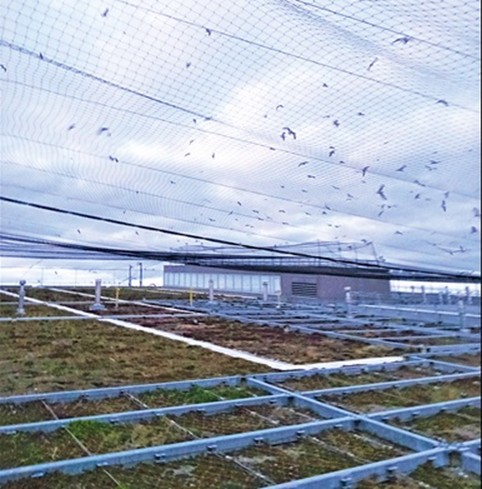

The issue can be seen in these photos of the large green roof on top of Leslie Barns, which attracts up to 15,000 gulls a year - posing a risk to health and safety.
Frequently asked questions
-
Have sound cannons been used in 2026? I heard a loud noise.
No. Sound cannons have not been activated by the TTC so far this season. The TTC is aware that other properties in the area are also using the same technology. Any noise thus far has not been triggered by the TTC.
-
How early do the cannons start? How often are they activated?
If needed to deter gulls, sound cannons are activated no earlier than 9 a.m. until 5 p.m. and occur a maximum of four times per day at random intervals. If no birds are present, the cannons are not used.
-
How loud are the cannons?
When used, the noise is similar to fireworks in the distance.
-
Are the cannons safe?
Yes. The TTC consulted experts to ensure compliance with noise and environmental regulations.
-
What other measures are being put into place?
Framed netting, patrolling and egg collection will also be used to discourage seagulls from settling.
-
Why not use falcons or dogs instead to deter seagulls?
Due to the size and layout of the roof at Leslie Barns and the streetcar wires, falcons and dogs are not viable options.
-
Why can’t the seagulls just stay?
Their presence leads to unsanitary conditions, increased maintenance costs, and dangers to chicks that fall from the roof.
-
Is TTC allowed to use sound cannons?
Yes. The TTC has a permit allowing approved deterrent measures under the Migratory Birds Convention Act.
-
Will this affect the transit service?
No, there will be no impact on service. However, customers on the 83 Jones bus route may hear the cannons when they are passing by the facility.
We apologize for any inconvenience this may cause and appreciate your understanding and patience.