

Celebrating Indigenous Peoples Month: Honour, Advance, Connect
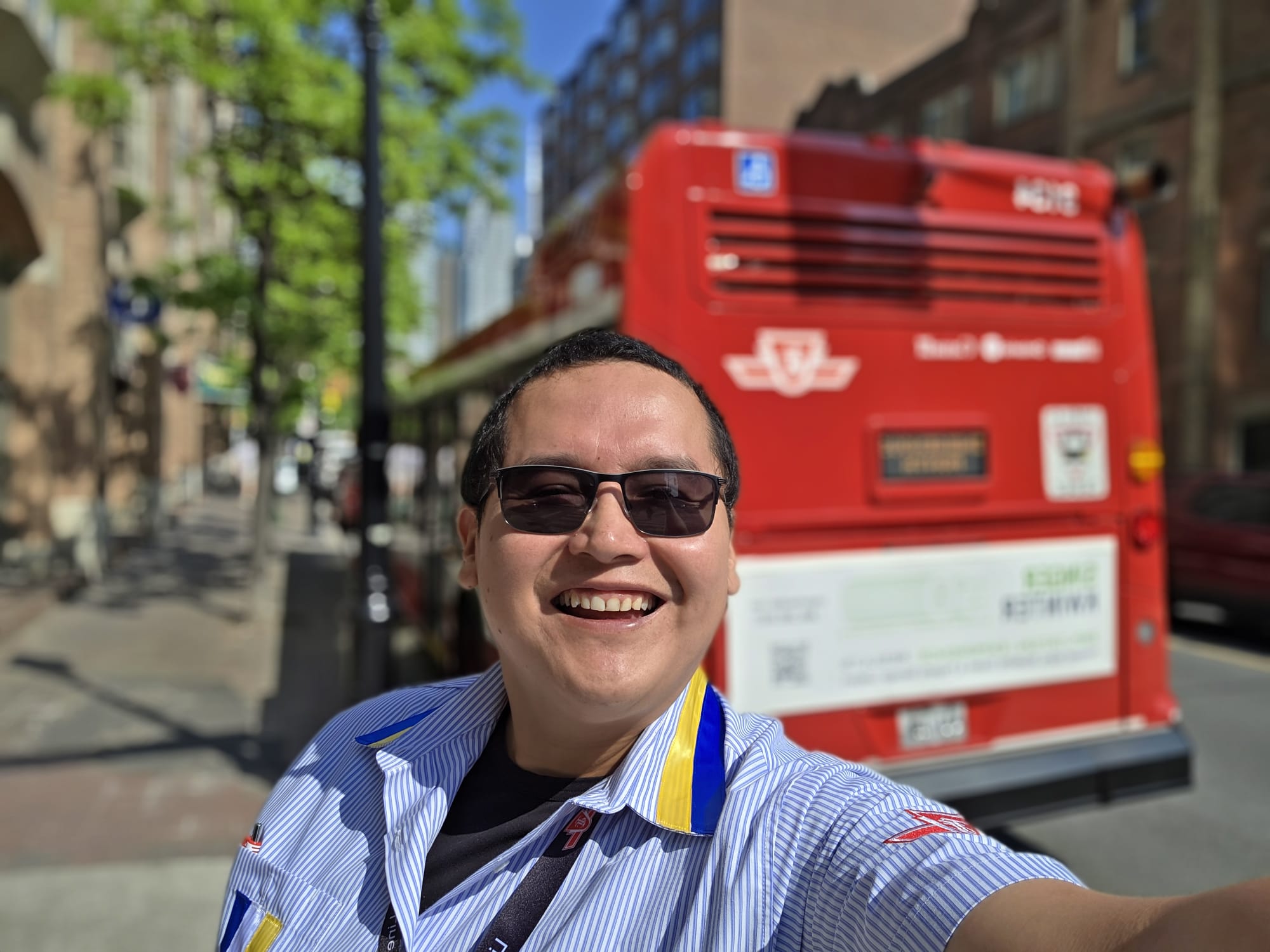
June is Indigenous Peoples Month, a time to honour the cultures, histories, traditions and contributions of First Nations, Inuit, and Métis Peoples across Turtle Island (an Indigenous name for North America).
At the TTC, Indigenous Peoples Month reflects an ongoing commitment to listening, learning and building meaningful relationships with Indigenous communities in Toronto.
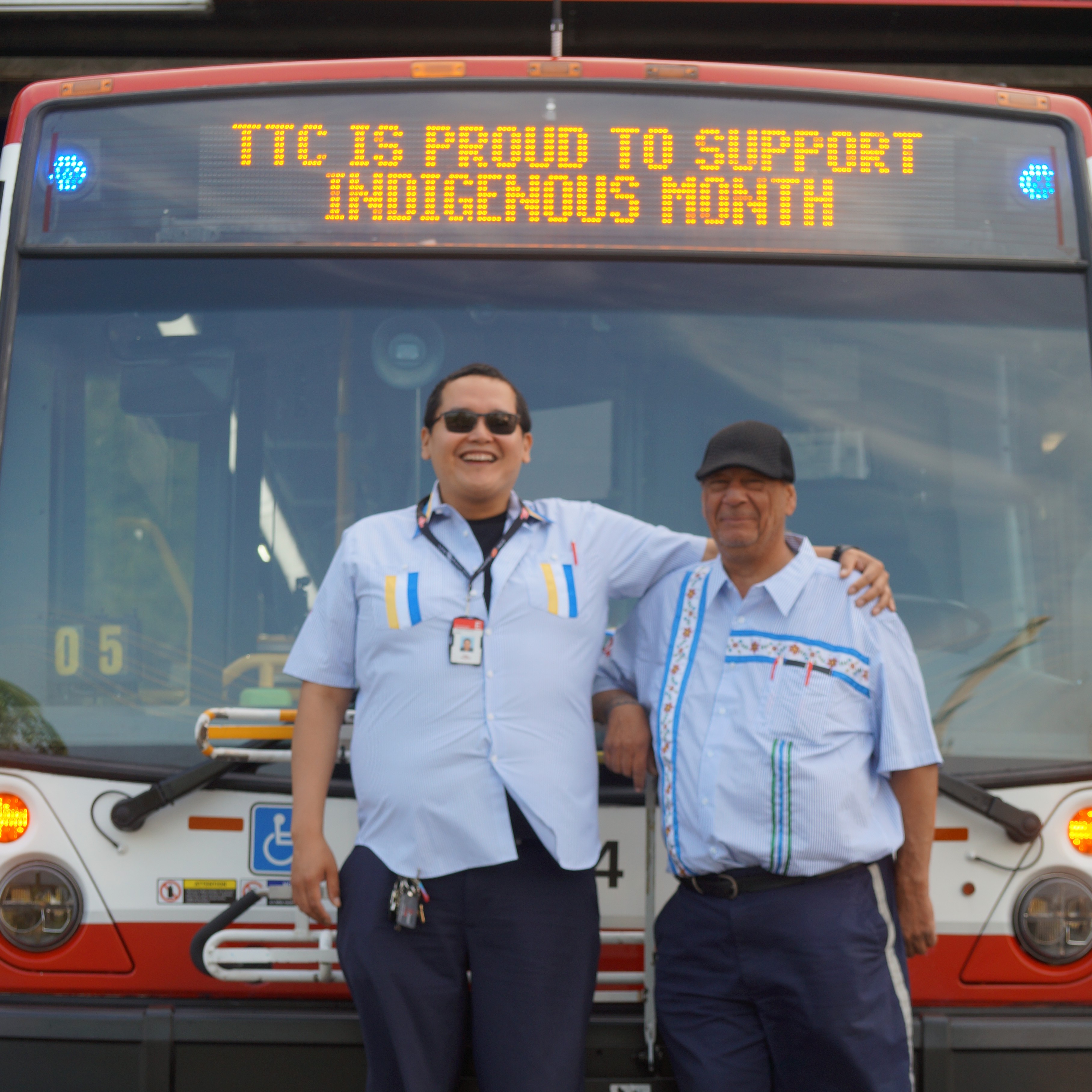
Throughout June, customers will see Indigenous Peoples Month creative across the TTC centred around three themes: Honour, Advance and Connect. Two specially wrapped buses will travel throughout the city featuring a layered collage of photography and storytelling inspired by TTC initiatives and Indigenous community partnerships, while digital posters in stations share brief reflections tied to Indigenous traditions, representation, healing and connection.
Together, the creative reflects the importance of respecting Indigenous teachings and traditions, advancing representation and opportunities, and strengthening relationships with Indigenous employees, Elders, organizations and communities across Toronto.
The stories below offer additional context and opportunities to learn more about the people, partnerships, and ongoing work helping move reconciliation forward at the TTC.
Honour
Learning through ceremony and tradition
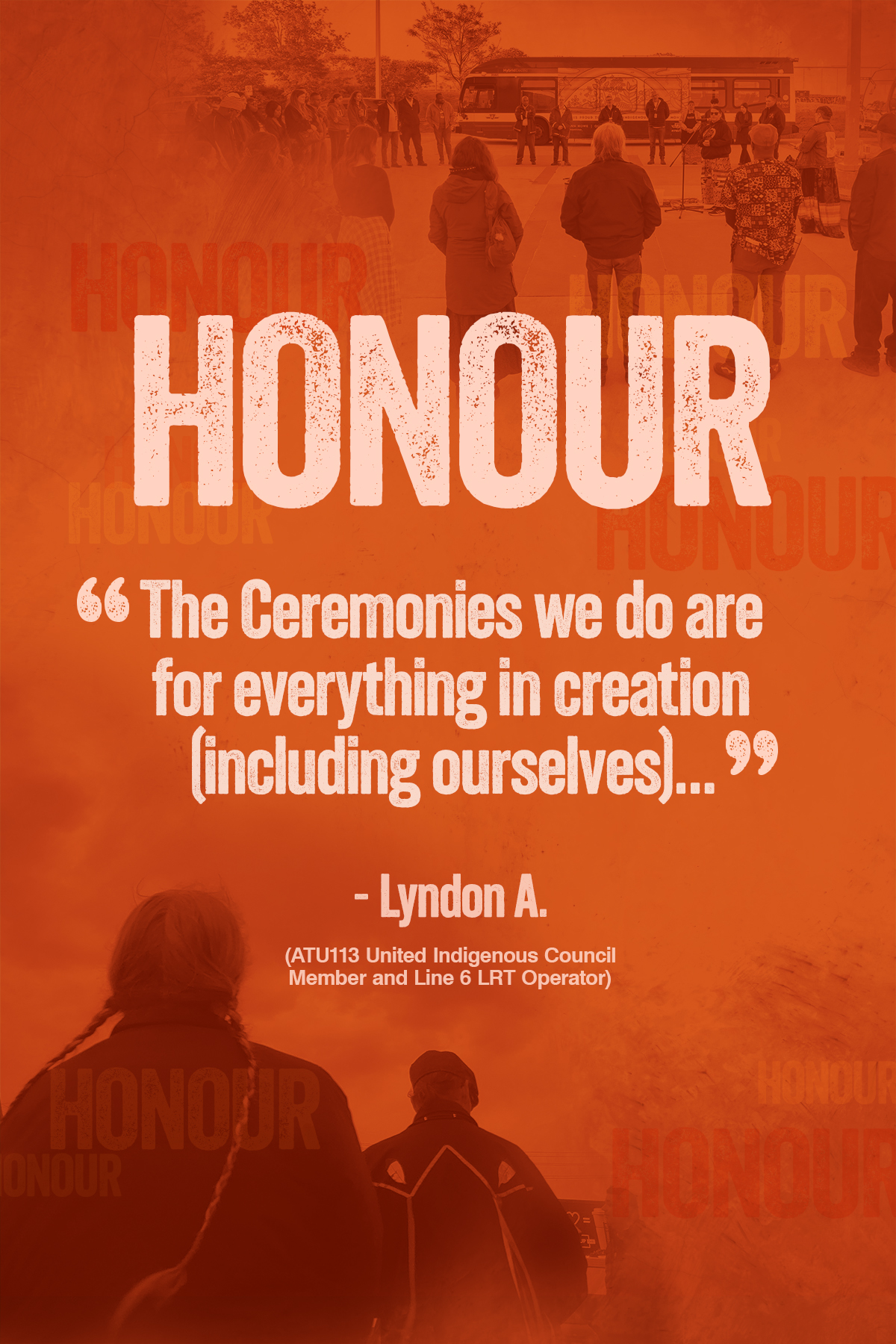
“’Amazing’ is the word I’d use to describe the experience of going to the Sunrise Ceremonies that we’ve held at the TTC for the past few years, especially the ones in the summer. The Ceremonies we do are for everything in creation (including ourselves) and it’s amazing to watch the way they influence the birds, who sometimes come to check out what we’re doing. It’s about connection to the environment and to each other and I encourage people to attend a Ceremony when given a chance!”
- Lyndon A., ATU Local 113 United Indigenous Council member and Line 6 LRT Operator
Since 2021, the TTC has partnered with the ATU Local 113 United Indigenous Council to host Sunrise Ceremonies that invite employees to learn from and experience Indigenous cultural traditions firsthand.
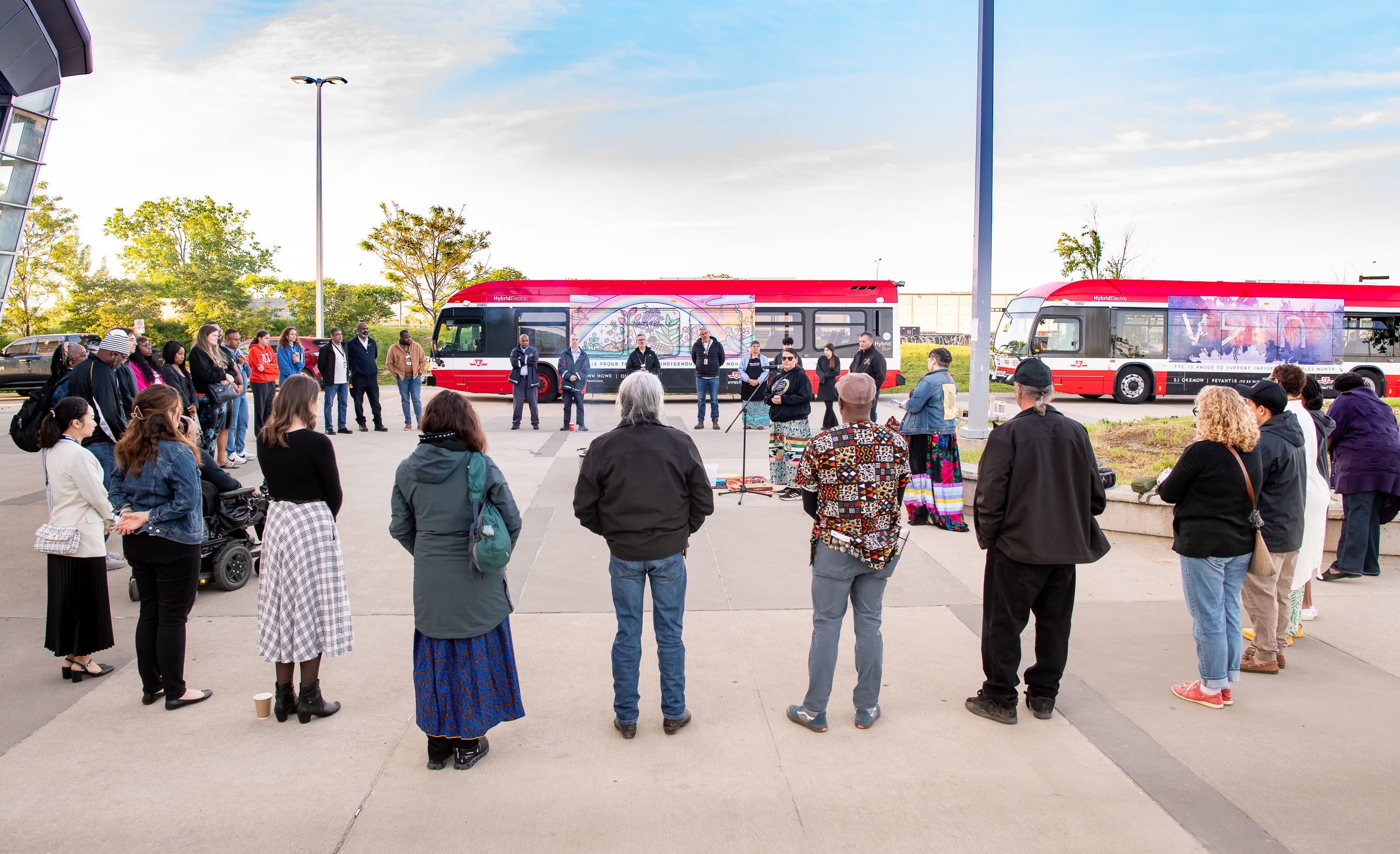
Beginning before the sun rises and led by Elders and Traditional Knowledge Keepers, Sunrise Ceremonies create space for reflection, learning and connection, and are held to welcome the new day, give thanks, and set intentions for the path ahead. These ceremonies are often held during important seasonal moments, including the Spring Equinox, Summer Solstice and Winter Solstice, and provide an opportunity to honour the balance between people, land, and spirit. Depending on the gathering, elements may include a Tobacco offering, Pipe Ceremony, Strawberry Ceremony or Water Ceremony – each carrying its own teachings.
The TTC has a fire pit specifically designed to host these sacred fires and has welcomed Sunrise Ceremonies at nearly every TTC division, bringing this experience across the organization.
Advance
Building a more inclusive TTC
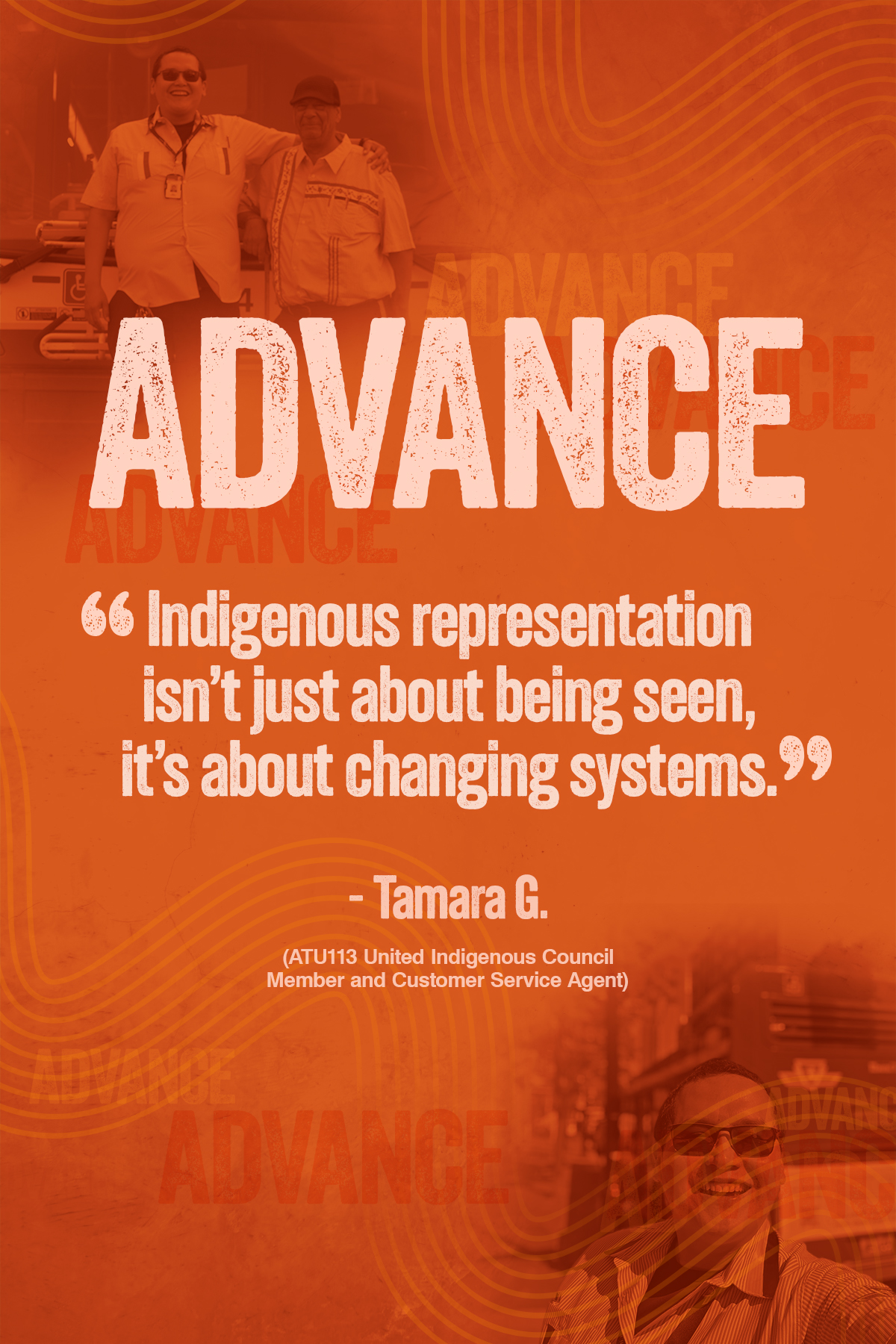
“Indigenous representation isn’t just about being seen, it’s about changing systems. Without deliberate pathways into employment, development, and long-term retention, representation alone doesn’t lead to real change. This work requires accountability and sustainability, ensuring Indigenous employees are not only present, but supported and able to grow. Done right, it contributes to reconciliation by reshaping workplaces today so that the next generation no longer has to carry the same barriers. Instead, they can enter spaces where they are expected, valued, and able to thrive.”
- Tamara G., ATU113 United Indigenous Council Member and Customer Service Agent
The TTC is committed to creating a workplace and transit system that supports First Nations, Inuit, and Métis Peoples thus reflecting the diverse communities we serve. This work is about more than representation; it’s about creating meaningful opportunities, removing barriers and building an environment where Indigenous employees feel welcomed, respected and supported to thrive.
Earlier this year, the TTC and the ATU Local 113 United Indigenous Council led an Indigenous hiring workshop and participated in an Indigenous-focused job fair as part of ongoing efforts to strengthen Indigenous representation and inclusion across the organization. This important work also supports the TTC’s broader commitment to equity, inclusion and reconciliation as outlined in both the Corporate Plan and the Anti-Racism Strategy.
Connect
Community partnerships and learning opportunities
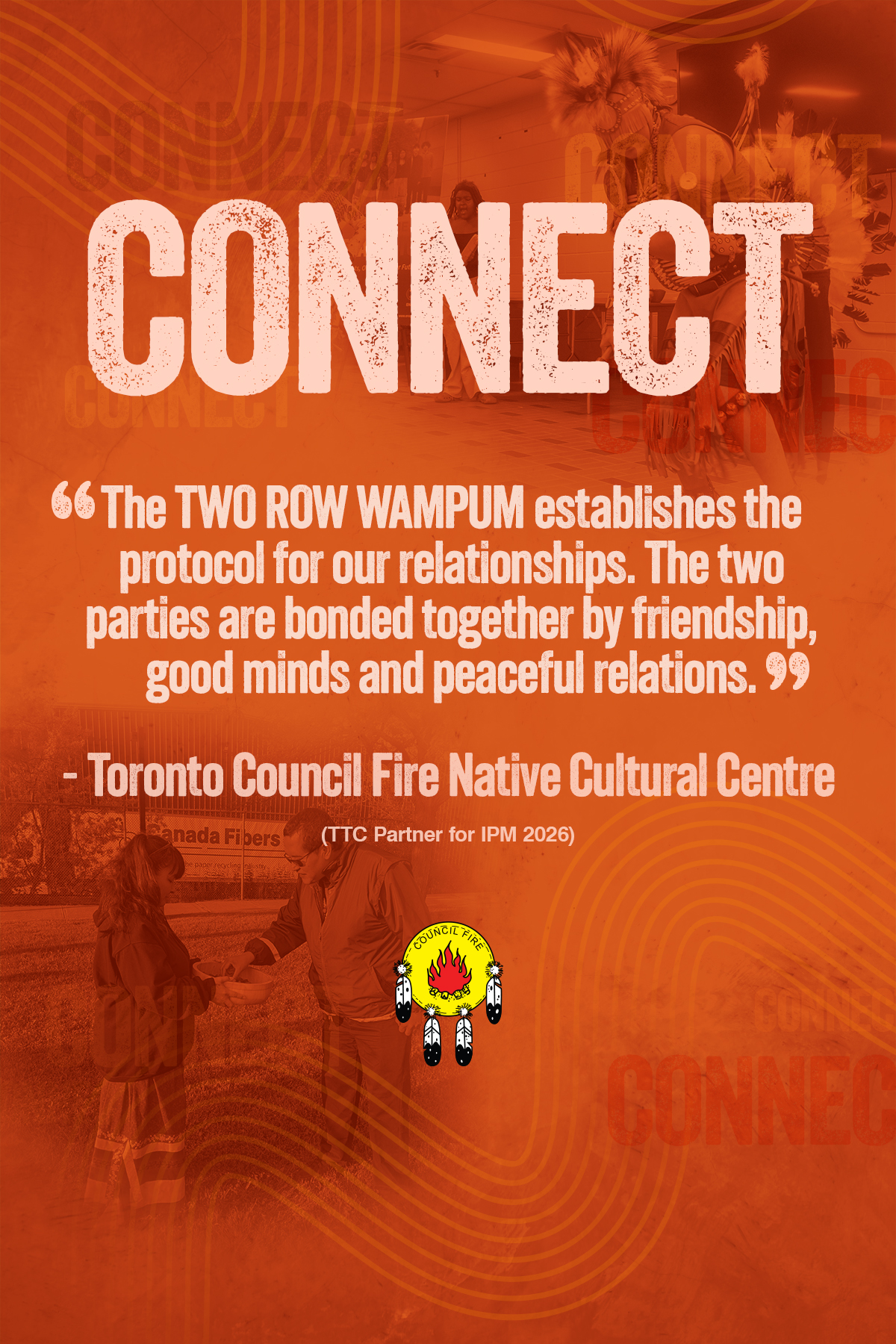
“The Two Row Wampum establishes the protocol for our relationships. The two parties are bonded together by friendship, good minds and peaceful relations."
- Toronto Council Fire Native Cultural Centre (TTC Partner for Indigenous Peoples Month 2026)
Building strong relationships with Indigenous communities is an important part of the TTC’s ongoing reconciliation journey. The Kaswentha (Two Row Wampum) helps guide the relationship between non-Indigenous organizations like the TTC, and Indigenous communities. The Two Row Wampum is a treaty that represents two distinct vessels travelling side by side in peace and helps guide the TTC’s approach to community partnership, teaching us to work alongside Indigenous communities in a spirit of respect and shared responsibility.
Our community partners bring knowledge, lived experience, and cultural wisdom that helps guide us in our reconciliation efforts. As we develop the TTC’s first Reconciliation Action Strategy, consulting with the Treaty Holders and Indigenous community agencies is an integral step.
Throughout Indigenous Peoples Month, and beyond, customers are encouraged to learn more about Indigenous cultures, organizations and the many community programs across Toronto. We are honoured to highlight our community partners below.
- Toronto Council Fire Native Cultural Centre
- Native Canadian Centre of Toronto
- Miziwe Biik
- University of Toronto First Nations House
- ENAGB Indigenous Youth Agency
- Native Women’s Resource Centre of Toronto
- 2-Spirited People of the 1st Nations
- Mississaugas of the Credit First Nation
- Indigenous Affairs Office of Toronto
Learn more
Traditional dance and cultural expression
“As a 60’s scoop survivor, traditional dancing is a gift as well as a reclamation. A reclamation of my culture, the traditions I was born into but most importantly, a reclamation of myself. I’ve worked hard to be where I am today and I am proud to be a strong, Anishinawbe Kwe.”
- Dawn S. (ATU113 UIC Member and Wheel Trans Operator)
Across Indigenous communities, there are many forms of traditional dance, performed individually, with a partner, or during community gatherings such as round dances. Each dance carries its own teachings, rhythms, and meanings helping to share stories and keep traditions alive across generations.
Today, powwows provide opportunities to experience and celebrate Indigenous dance and culture, but for many years these ceremonies were banned under the Indian Act, forcing Indigenous Peoples to preserve their cultural practices in secret. The continued presence of these traditions today reflects the strength and resilience of Indigenous communities.
Indigenous dance is a way of connecting to spirit, history, land, and community. Each step and movement carry stories passed down through generations, honouring ancestors while helping to keep culture alive for future generations. Indigenous dancers wear regalia that is deeply sacred and personal. Regalia is never a costume; it is a living expression of who the dancer is and where they come from.
Many dances also carry healing teachings. The Jingle Dress dance, traditionally worn and danced by women, is understood by many as a healing prayer. The dress is adorned with metal cones that create a rhythmic sound as the dancer moves. Passed down through oral tradition, the origin of the Jingle Dress is said to have come through a dream during the influenza pandemic of 1918. Maggie White, an Anishinaabe girl, was healed after dancing in the dress. Today, the dance continues as a powerful expression of hope, strength, and healing.
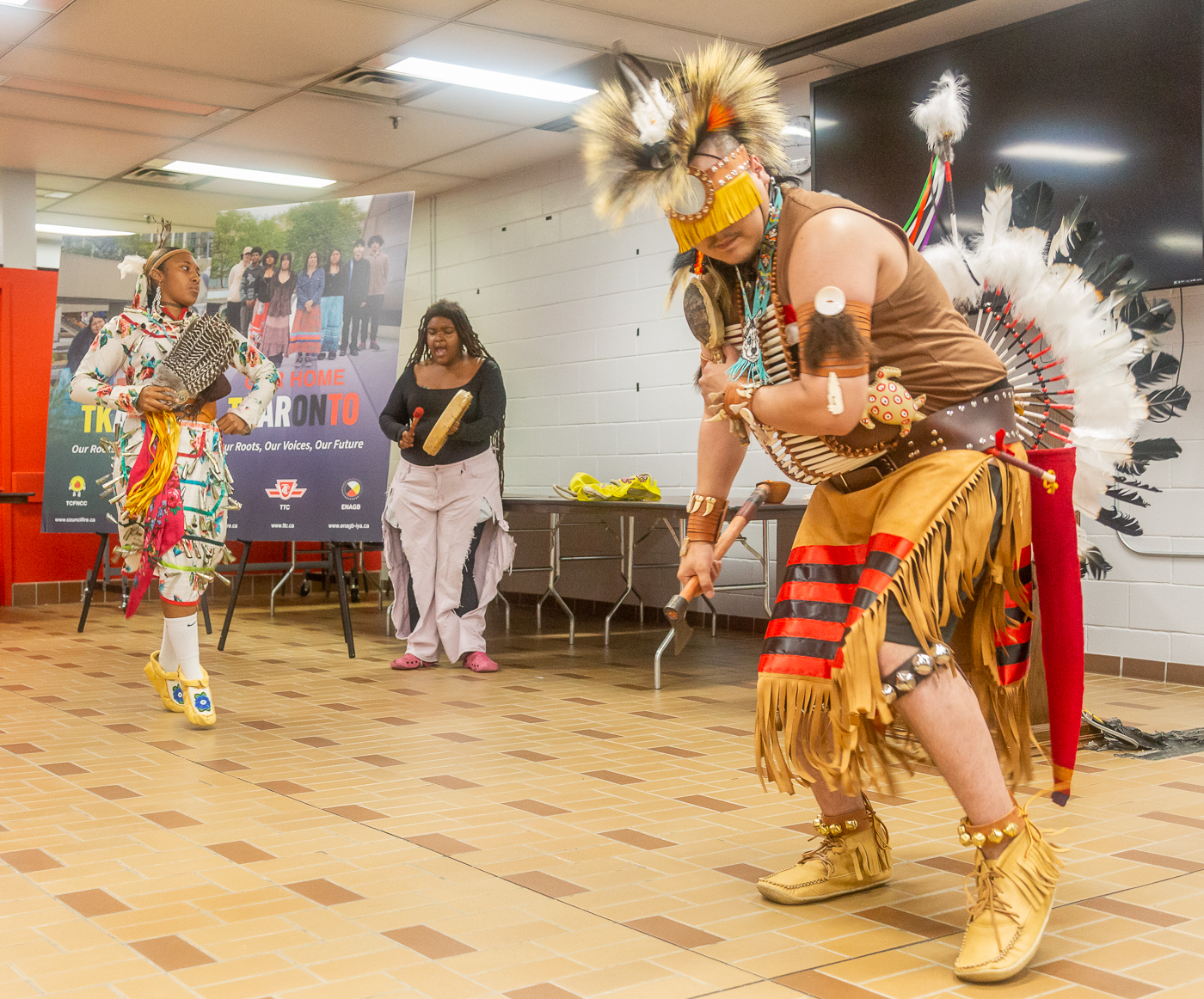
“Traditional dance placed me on the healing path I needed. My mother is the catalyst of my good health; spiritually, mentally, and physically. I strive to represent my people and our traditions in a positive light and hope to encourage my community.”
- Matthew M. (Son of UIC Member Dawn S. pictured above doing men’s traditional dance at the TTC’s Every Child Matters flag raising)
Learn more about other styles of Indigenous dance at: ICMI & Indigenous Dance.
Upcoming events:
Local powwows and cultural gatherings throughout Indigenous Peoples Month offer opportunities to learn about Indigenous traditions and culture, experience Indigenous dance, and appreciate the stories, teachings and community connections shared through these celebrations.
Events happening during Indigenous Peoples Month
5TH Annual 2-Spirit Powwow – Saturday, June 6
Milliken District Park
5555 Steeles Avenue East
Na-Me-Res Traditional Powwow – Saturday, June 13 beginning at 12 p.m.
Dufferin Grove Park
875 Dufferin Street